Programming for one athlete is a matter of matching a plan to a person. Programming for a club is a different problem: a single session has to serve a group whose members differ in ability by a wide margin, are pointing at different events on different dates, and have very different amounts of time available. Ignoring that variation is the standard failure — a session pitched at the middle is too hard for a third of the group and too easy for another third.
The shape of a typical membership
Endurance clubs tend to segment in a recognisable way. Roughly half to sixty per cent of members are entry-level athletes in their first year or two of the sport. Twenty to twenty-five per cent are experienced recreational athletes who have been training for years without being especially competitive. Ten to fifteen per cent are genuinely competitive, several of them at age-group level. One per cent or fewer sit in the elite range.
These proportions matter because they determine what a squad session should be built around. A session designed for the competitive tenth will be inappropriate for the majority; a session designed for the majority leaves the competitive members undertrained and, in practice, drifting away to train alone.
Design one session, three intensities
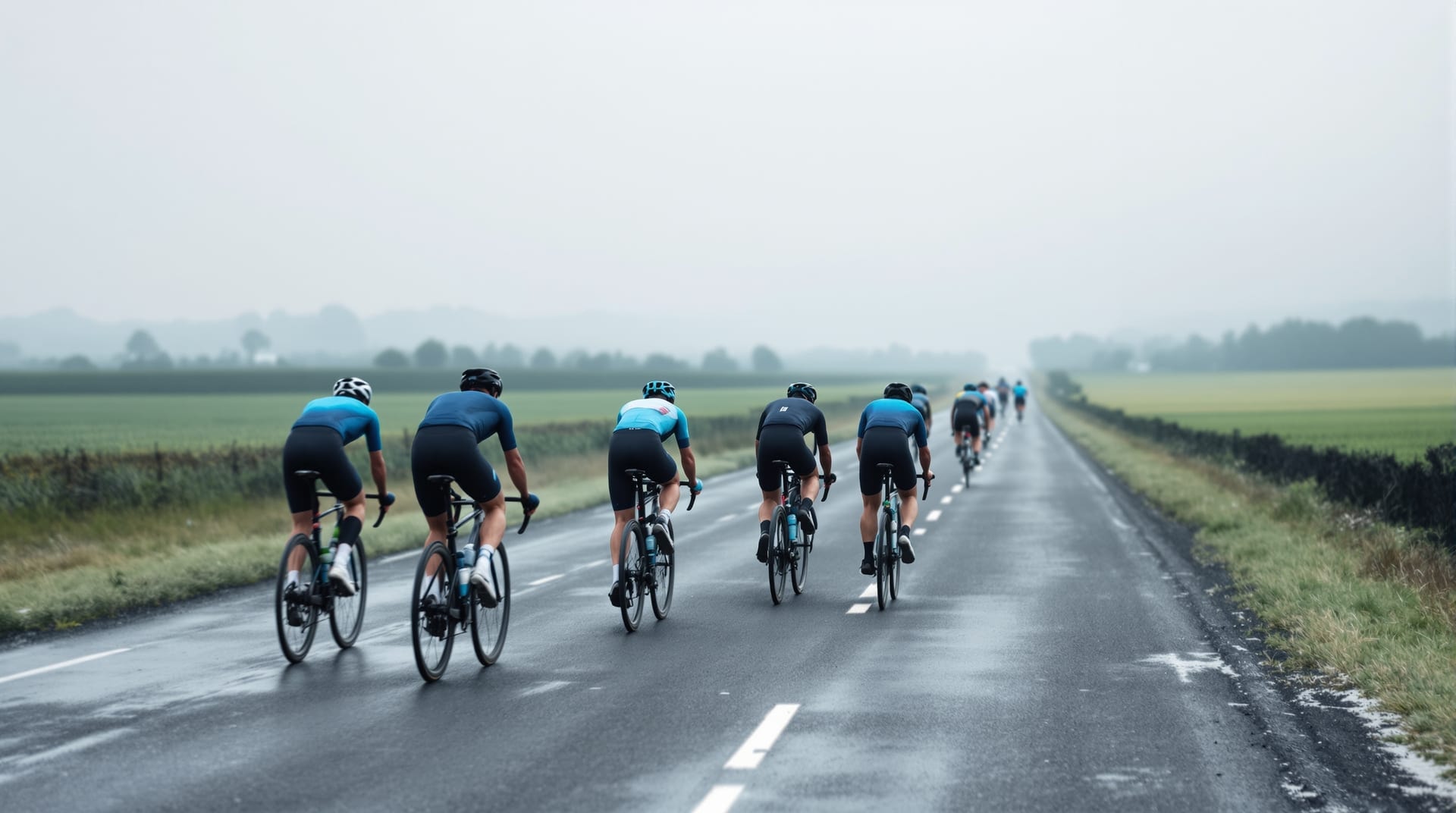
The workable solution is not three separate sessions but one session structure with individually scaled targets. The structure — warm-up, main set format, recoveries, cool-down — is common. What varies is the target each athlete works to, and the two variables that carry most of the scaling are:
- Repetition count or total volume. The same interval format, with newer athletes completing fewer repetitions. This is the simplest scaling and preserves the group's shared experience of the session.
- Individual intensity anchors. Everyone works at, say, threshold effort, but threshold is a personal number established from the athlete's own testing rather than a pace posted on a whiteboard. How those anchors are set is covered in judging training intensity.
What should not vary is recovery duration, at least in swimming and on the track, because it is what keeps a group together and makes a session coachable.
Mapping a season across mixed race calendars
Club members race on different dates, so a single squad peak is impossible. What is possible is a common seasonal skeleton with individual peaks laid over it.
The skeleton follows the general endurance sequence: a long preparation phase emphasising aerobic volume and technique, a transition phase in which specific intensity is introduced, a competition phase, and a restoration phase. Analysis of training periodization, methods, intensity distribution and volume in highly trained endurance athletes describes the structures that recur across sports, and the parallel review of periodization models in elite swimmers shows the same problem handled within a single discipline where the whole squad trains together.
Individual peaks are handled by exception rather than by rewriting the plan. An athlete two weeks from an important race attends the same sessions but with reduced volume and, in the final week, skips the heaviest of them. A club that cannot accommodate that will produce members who quietly stop attending in the weeks that matter most to them.
Collecting the information the plan needs
A club plan needs remarkably little data per athlete, but it needs it in a usable form. For each member: the events they intend to do this season with dates, a priority ranking across those events — one for the races that matter, two for the rest — and the distance of each. Adding training availability and any current injury completes it.
The priority ranking is the item most often skipped and the one that does the most work. An athlete who has ranked ten races as equally important has not planned a season; they have listed a calendar, and no periodization is possible against it.
Practical constraints clubs actually face
- Fixed facility slots. Pool time and track access come at set hours, which means the week's structure is partly decided before any training consideration. Build the plan around the fixed points rather than pretending they are movable — see the weekly schedule.
- Attendance is voluntary and irregular. A club session must be worthwhile in itself, because many members will not do the surrounding work. This argues for sessions that are aerobically or technically valuable rather than sessions that only make sense as part of a block.
- Newer members will follow the strongest. In an unstructured group ride or run, the entry-level athlete rides the competitive athlete's session. Explicit grouping is the only reliable remedy.
- Coaching attention is finite. One coach cannot give individual technical feedback to thirty athletes. Rotating focused attention through a small subgroup each week is more effective than diluting it evenly.
Camps and blocks
A club camp is the one occasion when the constraints relax — time is abundant, the group is together, and technical work can be done properly. It is also where the ability spread does most damage if unmanaged, because a shared long day is experienced completely differently by an entry-level athlete and a competitive one. What a camp is for, and how to keep it from wrecking the following fortnight, is covered in training camps. The individual version of the season-mapping process is set out in building a training program.