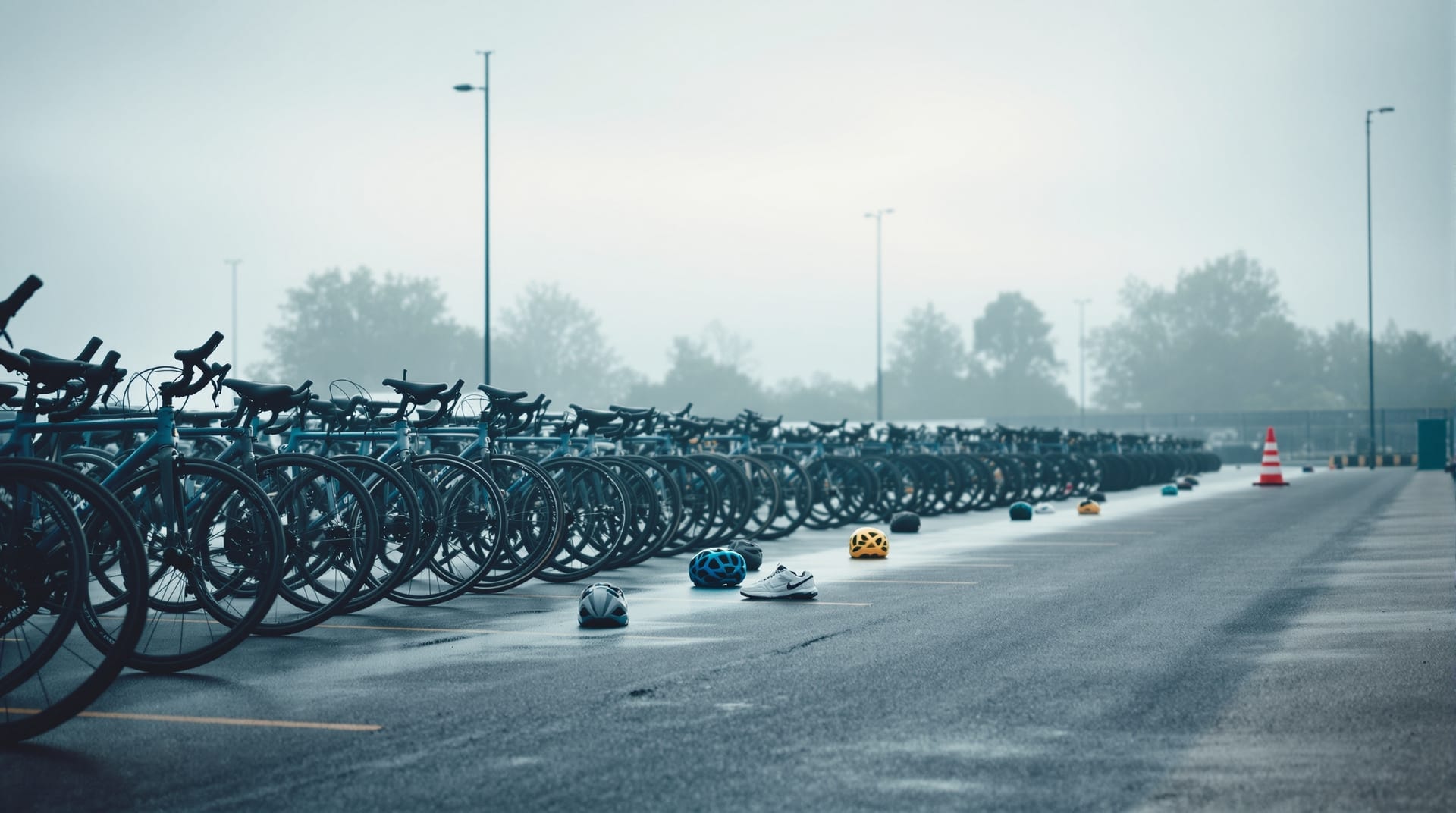
Multisport training is not three training programmes running in parallel. It is one programme with three expressions, and the interesting problems all live in the places where the disciplines meet: the sessions that cannot follow each other, the fitness that transfers and the fitness that does not, and the fact that a week has only so many hard days in it regardless of how many sports are competing for them.
Triathlon's roots are in the mid-1970s, and in the decades since the format has spawned an entire family of events — duathlon, aquathlon, off-road variants, and single- and multi-day adventure racing across tundra, oceans and mountains. The training logic below applies across that family, because what they share is the constraint: several distinct endurance disciplines, one athlete, one recovery budget.
What transfers between the disciplines, and what does not
Central adaptations — the cardiac and blood-side changes that raise the ceiling on oxygen delivery — transfer reasonably well. An athlete who has built a large aerobic base cycling will not start from zero when they run. Peripheral adaptations do not transfer nearly as well: the enzymatic and capillary changes inside the working muscle are specific to the muscles doing the work, and swimming develops very little of what running needs.
This asymmetry is why a strong cyclist can often run further than their running training alone would predict, and yet still be wrecked by it the next day. The cardiovascular system is willing; the tissue is not conditioned. The review of physiological differences between cycling and running sets out the mechanical distinction cleanly: cycling is concentric-dominant and mechanically supported, while running is repeatedly loaded with eccentric contraction on impact. Two sessions can cost the same in oxygen and cost very differently in structural damage.
The practical consequences
- Running is the expensive discipline. Because it carries the impact load, it is where injury accumulates and where volume should rise most slowly. Aerobic volume that has to go somewhere is cheaper on the bike or in the water.
- Swimming is the technical discipline. Water resists at roughly the square of velocity, so the return on technique is far higher than the return on fitness alone. An athlete who improves their stroke gains more than one who simply swims more.
- Cycling is the volume discipline. It absorbs long aerobic hours with the least structural cost, which is why the long ride tends to anchor the week.
Ordering sessions within a day and a week
When two sessions share a day, the order is a real decision rather than a matter of convenience. The general rule is that the session with the highest technical or neuromuscular demand goes first, because both degrade quickly with fatigue. Swimming technique work done after a hard run is largely wasted — the athlete rehearses a tired stroke.
A second rule concerns what follows a long run. Because running's damage is structural and delayed, the day after a long run is usually a poor day for anything requiring precise movement, and a good day for easy swimming, which offloads the legs while keeping aerobic frequency up.
A third concerns the brick — riding and then running immediately afterwards. It is a specific rehearsal for a specific transition, and it is more taxing than the sum of its parts. Treated as a key session it is valuable; scattered through the week as a habit it quietly converts easy days into moderate ones. How to keep that from happening is covered in the weekly schedule.
Frequency beats duration when three sports compete
Given a fixed number of hours, the multisport athlete generally does better spreading them across more, shorter sessions than concentrating them. Swimming in particular rewards frequency: three forty-minute swims will usually improve a stroke more than one two-hour swim, because the stroke deteriorates as the session goes on and long sessions spend most of their time grooving fatigue.
Running is the partial exception, because a long run develops something a series of short runs does not — durability, and the specific ability to hold form late. The compromise most weeks settle on is high frequency in swimming, moderate frequency with one anchor session in cycling, and moderate frequency with one genuinely long run.
Single-sport and unconventional endurance goals
The same planning framework covers duathletes, single-sport endurance athletes and athletes preparing for goals that do not fit any race calendar — a mountaineering objective, a multi-day mountain-bike stage race, a long-distance sailing campaign, or simply general endurance fitness. In each case the method is identical: identify the specific demand, work backwards to the qualities that support it, and distribute those qualities across a season. That process is described in building a training program.
Strength work is not optional in multisport
Three disciplines produce three narrow, repetitive movement patterns and very little else. Left alone, that is a recipe for the mobility restrictions and one-sided weaknesses that eventually show up as an injury in the most loaded discipline. A small, consistent amount of strength and mobility work — enough to maintain range and posterior-chain strength — costs little and protects the training that matters. Race formats, distances and rules for the events referenced throughout are published by World Triathlon.